The blue Planet Ocean-style watch photographed for this site is striking because colour runs through both the dial and the bezel. The older page described it using an unofficial factory label and a ‘clone 8900’ claim. Those phrases are not evidence that its movement matches Omega’s genuine calibre or that the case is made from the same materials.
The blue surface is the main subject
Blue can look nearly black under one light source and bright under another. This makes the Omega Planet Ocean blue ceramic style a good example of why marketing photos must be interpreted carefully. Different shades between a bezel and a dial may reflect materials, coatings, lighting or photographic processing. Nothing in the images establishes the physical composition.
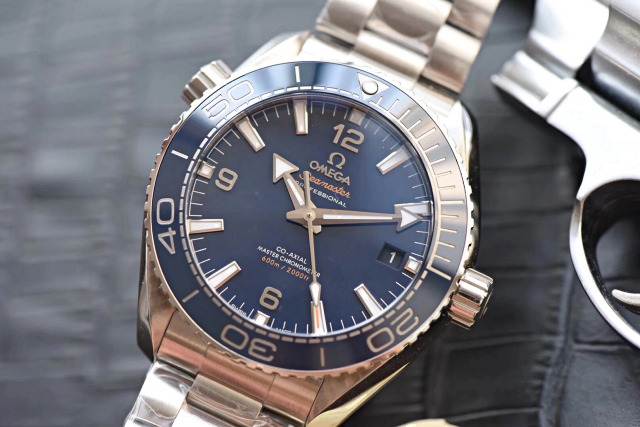
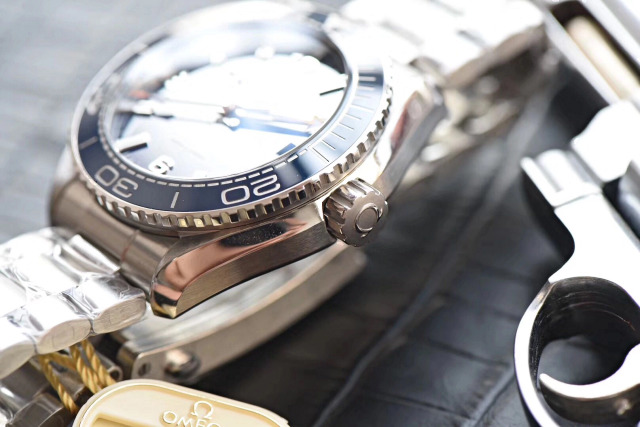
The hands and hour markers are important points of reference. A diver-inspired watch relies on clear contrast. The case profile and crown position help distinguish Planet Ocean from slimmer Seamaster models, although the archive does not provide measurements. A reader comparing designs should first identify the exact official model being imitated.
Separate the movement from its label
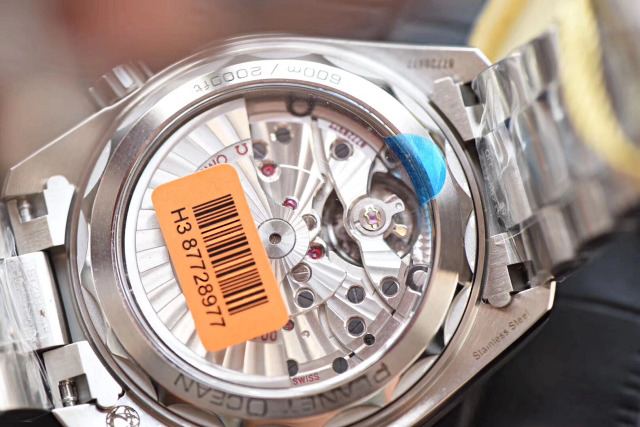
The original text used ‘clone’ as if it described a known technical standard. It does not. Confirming a movement’s architecture or timekeeping requires a view of the mechanism and independent testing. No such results are presented here, and no claim of verified water resistance is made.
This image-based study belongs in the Omega replica collection archive, where it can be compared with other Planet Ocean examples. The home page remains the main entry point to the broader publication.

The movement name is especially prone to confusion on Planet Ocean replicas. An Omega movement number can refer to a genuine calibre family, while an imitation mechanism may merely imitate its rotor appearance. Even if a photograph exposes the back, the visible decoration is not the same as an authenticated internal design. A meaningful technical examination would identify the actual movement parts and document what functions were tested; none are supplied in the archived material.
The result is still visually interesting: a substantial diver’s silhouette, a saturated blue palette and bold indications. A careful article can explain those choices without assigning unsupported engineering qualities to the watch.